
Stretch Marks: Why They Form and How Skin Regeneration Helps
Introduction
Stretch marks are one of the most common skin changes people experience — and one of the least explained.
They can appear during pregnancy, after weight changes, growth spurts, hormonal shifts, or periods of rapid transformation. While often framed as a cosmetic concern, stretch marks are actually a structural response within the skin, reflecting how collagen and elastin responded to stress.
Understanding why stretch marks form — and how skin regeneration can help — allows for more realistic expectations and a healthier relationship with your skin.
What Stretch Marks Really Are
Stretch marks, medically known as striae, occur when the skin stretches faster than its internal support system can adapt.
Beneath the surface, this rapid stretching may cause:
Micro-tears in collagen fibers
Disruption of elastin networks
Changes in skin thickness and strength
Early stretch marks often appear red, purple, or pink due to inflammation and increased blood flow. Over time, they typically fade to lighter or silvery tones — but the underlying structural change remains.
This is why stretch marks behave differently than surface-level skin concerns.
Why Stretch Marks Are Not Just a Surface Issue
Topical products, such as creams and oils, primarily affect the outermost layer of the skin. While they may improve hydration and comfort, they cannot reach the deeper layers where stretch marks originate.
Stretch marks are a dermal issue, not an epidermal one. This distinction explains why surface treatments alone often produce limited results and why deeper, regenerative support is needed for meaningful improvement.
Common Triggers for Stretch Marks
Stretch marks may form during times of rapid change, including:
Pregnancy
Weight gain or loss
Puberty and growth spurts
Hormonal fluctuations
Muscle growth
Genetics also play a role, influencing how resilient collagen and elastin fibers are under stress.
Importantly, stretch marks are not caused by poor skincare, lack of fitness, or neglect. They are a natural response of living skin adapting to change.
How Skin Regeneration Addresses Stretch Marks
Skin regeneration treatments focus on supporting the skin’s ability to repair and rebuild itself.
Rather than attempting to erase stretch marks, these treatments aim to:
Improve collagen organization
Increase skin thickness and resilience
Enhance circulation to affected areas
Improve overall skin texture and tone
By strengthening the surrounding skin, stretch marks often become less noticeable and blend more naturally with adjacent tissue.
The Role of Collagen in Stretch Mark Repair
Collagen is the primary structural protein in the skin. When collagen fibers are damaged during rapid stretching, the skin loses strength and elasticity in that area.
Non-invasive regenerative treatments help by:
Encouraging new collagen production
Supporting reorganization of existing fibers
Improving skin firmness over time
This process does not happen overnight — but gradual improvement is a sign of healthy skin response.
Why Skin Regeneration Takes Time
One of the most important aspects of stretch mark care is understanding timeline.
After stimulation, the body needs time to:
Produce new collagen
Remodel damaged tissue
Strengthen skin structure
This is why improvement typically occurs over weeks or months, rather than days. Skin regeneration respects the body’s natural pace, leading to more stable and sustainable results.
What Results Typically Look Like
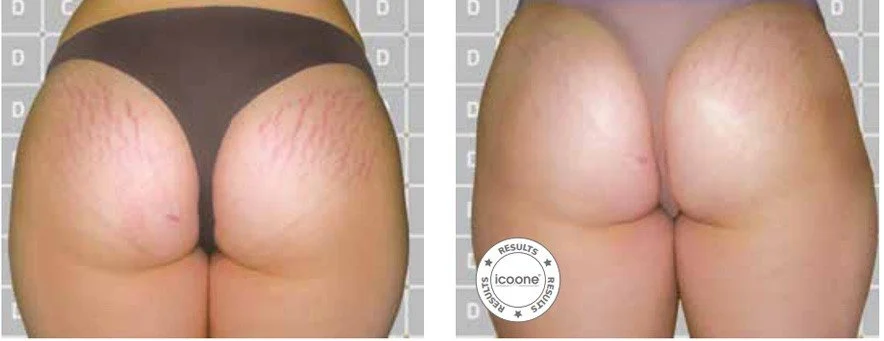
With non-invasive skin regeneration, many clients notice:
Softer texture in treated areas
Improved blending of stretch marks with surrounding skin
More even skin tone
Skin that feels stronger and more resilient
Stretch marks often become less prominent, rather than disappearing completely. This distinction is essential for healthy expectations and long-term satisfaction.
Factors That Influence Stretch Mark Improvement
Results vary from person to person and depend on factors such as:
Age of the stretch marks (newer marks often respond more readily)
Overall skin quality
Circulation and lymphatic health
Hormonal environment
Consistency of care
A consultation helps determine what level of improvement is realistic for your skin.
Who Is a Good Candidate for Non-Invasive Stretch Mark Treatments
Non-invasive stretch mark care is often well suited for individuals who:
Prefer gradual, natural-looking improvement
Want to avoid surgery or downtime
Are willing to commit to a series of treatments
Understand that results vary
It may not be ideal for those seeking immediate or dramatic correction.
Stretch Mark Care in Grover Beach, CA
If you’re exploring stretch mark treatment in Grover Beach, non-invasive skin regeneration offers a supportive, wellness-centered option that fits active coastal lifestyles.
These treatments are commonly used for:
Abdominal stretch marks
Thighs and hips
Arms and lower back
Post-pregnancy skin support
How Stretch Mark Care Fits Into a Holistic Skin Plan
Stretch mark improvement often works best when combined with:
Body skin tightening treatments
Lymphatic drainage therapy
Circulation-supportive skin detox
Ongoing maintenance care
This integrated approach supports skin health from multiple angles.
Final Thoughts
Stretch marks are a visible record of change — growth, pregnancy, strength, or transformation. While they don’t need to be erased to be accepted, many people choose to support their skin so it feels stronger, smoother, and more comfortable.
Non-invasive skin regeneration offers a respectful, realistic approach that works with your body, not against it.
Call to Action
👉 Book a stretch mark consultation: 805-867-7298
👉 Learn about skin regeneration, body skin tightening, or series-based care options
Disclaimer: Individual results vary. Non-invasive skin regeneration treatments support skin texture and appearance but do not guarantee complete elimination of stretch marks.