
Why Hair Thinning Often Starts at the Scalp: The Biology Most People Miss
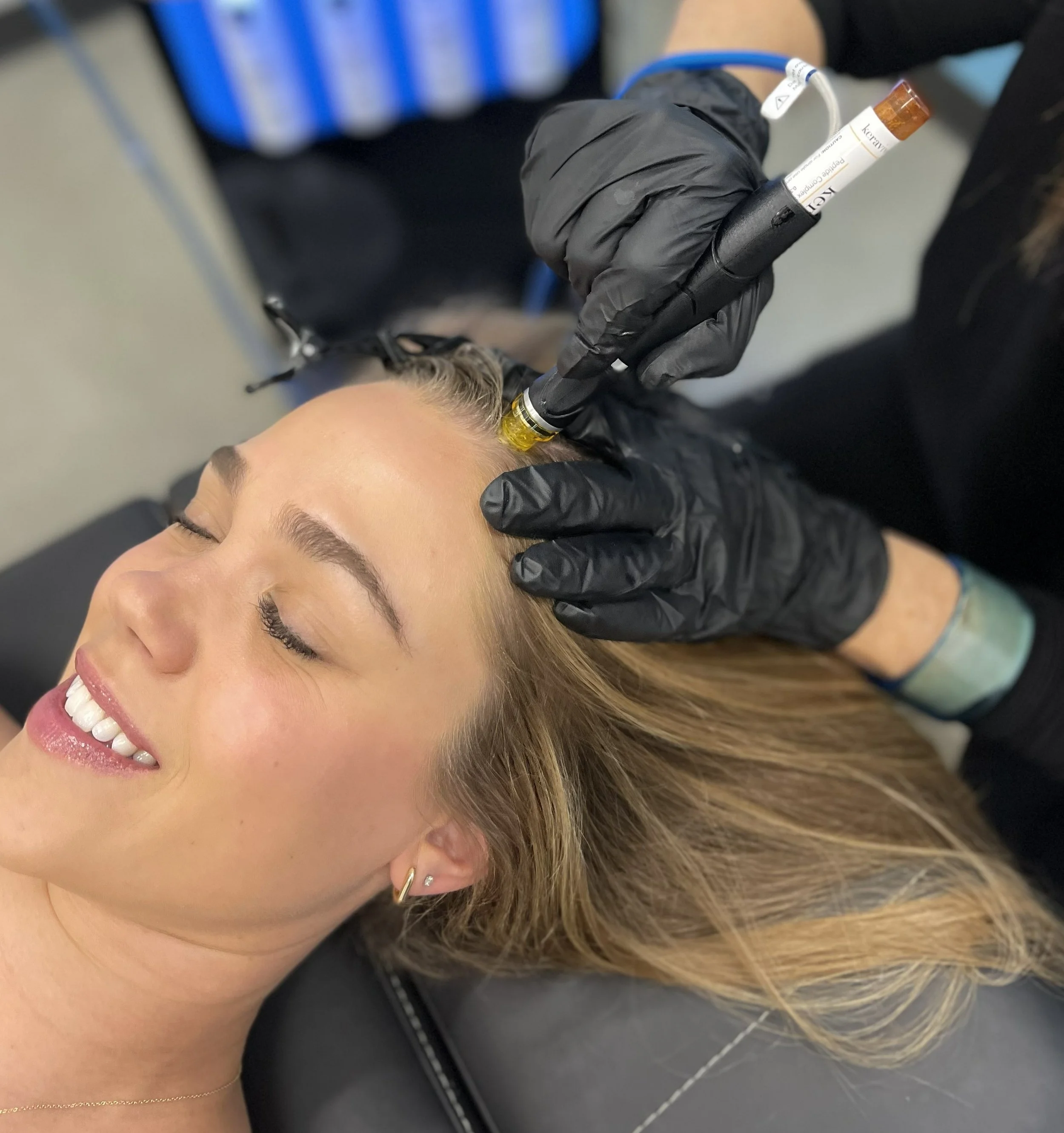
Hair thinning is frequently treated as a strand problem — something to fix with serums, supplements, or styling changes.
But hair does not thin in isolation. In many cases, thinning begins with changes in the scalp environment, long before visible hair loss becomes obvious.
Understanding scalp biology helps explain why early, non-invasive intervention can support healthier hair behavior over time.
The Scalp Is Living Tissue — Not Just a Surface
The scalp is a highly vascularized, metabolically active extension of your skin. It contains:
Dense networks of blood vessels
Hundreds of thousands of hair follicles
Sebaceous (oil) glands
Lymphatic channels
Connective tissue and fascia
Hair follicles depend on this environment for oxygen, nutrients, and hormonal signaling.
When the scalp environment becomes compromised, follicles respond accordingly.
Circulation: The Foundation of Hair Support
Hair follicles require consistent oxygen and nutrient delivery. Reduced scalp circulation may contribute to:
Shortened growth cycles
Increased shedding
Thinner hair shafts
Delayed regrowth
Chronic stress, poor posture, inflammation, and tension in scalp fascia can all reduce microcirculation.
Non-invasive scalp treatments often focus on gently improving blood flow, helping follicles function in a more supportive environment.
Inflammation and Hair Shedding
Low-grade scalp inflammation is one of the most under-discussed contributors to hair thinning.
Inflammation may be triggered by:
Hormonal shifts
Chronic stress
Product buildup
Microbial imbalance
Tight hairstyles
Poor lymphatic drainage
When inflammation is present, follicles may enter resting phases prematurely, increasing shedding.
Supporting scalp calmness and circulation can help restore healthier growth cycles.
Lymphatic Congestion and Follicle Stress
The scalp has its own lymphatic network. When lymphatic flow is sluggish:
Fluid accumulates
Waste removal slows
Tissue becomes congested
Congested tissue may compromise follicle efficiency.
Lymphatic-supportive scalp therapies help maintain fluid balance and improve tissue comfort.
Why Products Alone Often Fall Short
Many over-the-counter hair products focus on stimulating follicles directly. However, if the scalp environment is inflamed or poorly circulated, stimulation alone may not be effective.
Addressing scalp health first creates a stronger foundation for any topical or nutritional strategy.
What Non-Invasive Scalp Treatments Focus On
These treatments may help:
Improve microcirculation
Reduce scalp congestion
Support lymphatic flow
Increase oxygen delivery
Enhance tissue flexibility
The goal is not to promise regrowth, but to create healthier conditions for follicles to perform optimally.
Hair Thinning Support, Five Cities Area
If you're seeking non-invasive scalp and hair support in the five cities area, we offer proactive, early intervention, scalp-focused therapies.
Final Thoughts
Hair thinning often reflects what’s happening beneath the surface. Supporting circulation, reducing inflammation, and improving scalp environment creates the best possible foundation for healthier hair behavior.
CTA:
👉 Book a scalp and hair consultation: 805-867-7298
👉 Pair with follicle stimulation and lymphatic support
Disclaimer: Individual results vary. Treatments support scalp health but do not guarantee regrowth.